Alabama Flood Zone Rules Every Homeowner Should Know
Alabama flood zone rules decide whether your lender requires flood insurance and how fast you need to dry out after a storm. Here is what every homeowner should know.
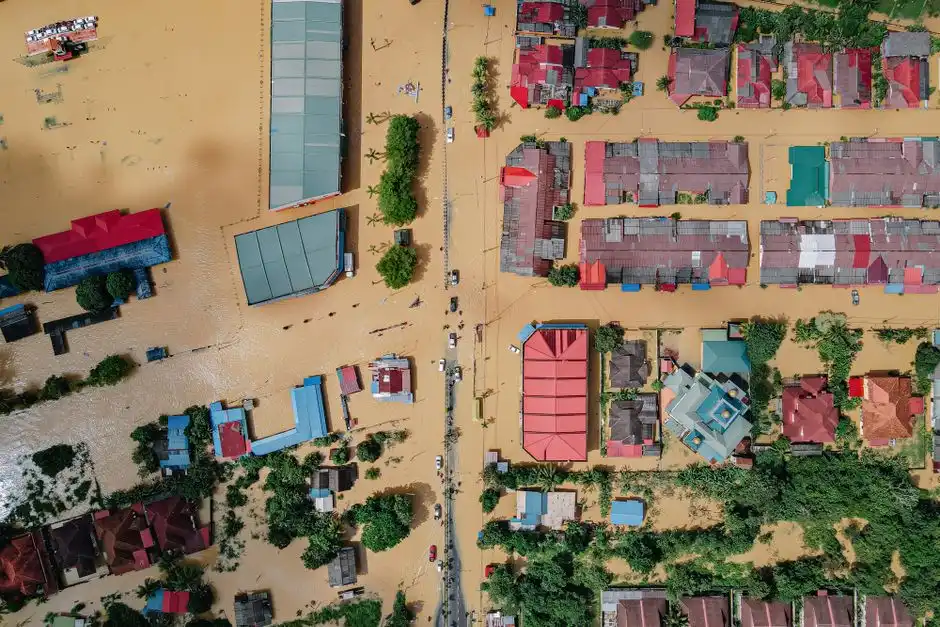
Alabama flood zone rules are FEMA map designations that tell you how likely your property is to flood and whether your mortgage lender can require flood insurance. If your home sits in a high-risk zone - anything starting with the letter A or V - a federally backed loan almost always comes with a mandatory flood policy. If it sits in a moderate or minimal-risk zone, insurance is optional but still worth pricing.
What follows is how to pull your own flood zone, what the designations mean in plain English, and what to do the moment water actually gets inside your house.
What Alabama flood zone rules actually require of homeowners
Alabama flood zone rules do not tell you how to build or when to evacuate. They set the insurance and construction standards that lenders, insurers, and local building departments enforce.
Three things actually get triggered by your zone designation:
- Lender requirements. If you have a federally backed mortgage (FHA, VA, USDA, Fannie, Freddie) and any part of the structure sits in a Special Flood Hazard Area, the lender must require flood insurance for the life of the loan.
- Building permits. New construction or substantial improvements in a high-risk zone have to meet local floodplain ordinances - elevation certificates, lowest-floor elevation rules, and in some cases open foundation designs.
- Disclosure. Sellers in Alabama have to disclose known flood damage and whether the property has ever received federal flood disaster assistance.
That is the whole regulatory picture. Everything else - whether you buy insurance voluntarily, how you waterproof a crawl space, how fast you dry out after a storm - is your call.
How to find out what flood zone your Alabama home is in
You can pull your Alabama flood zone in about five minutes using FEMA's Flood Map Service Center at msc.fema.gov. Type your address into the search bar and the site returns your effective Flood Insurance Rate Map panel and your zone letter.
If the map is confusing, call your county's floodplain administrator - every Alabama county has one, usually in the engineering or building department. They will tell you your zone over the phone.
One warning: FEMA remaps. Panels that were effective in the 1990s have been revised multiple times since, and a property that sat in an X zone ten years ago can now be shaded into an AE zone. Always check the current effective date on the panel, not a screenshot from an old closing packet.
Does Alabama require flood insurance?
Alabama does not require flood insurance by state law. The requirement comes from your lender, and it applies only when the property is in a Special Flood Hazard Area and the loan is federally backed.
Here is the practical breakdown:
- Zone A, AE, AO, AH, A99, V, VE: high risk. Federally backed loans require coverage. Expect $700 to $2,500 a year for a typical single-family home depending on elevation, coverage amount, and whether you have a basement.
- Zone B, C, X (shaded): moderate risk. No federal requirement, but roughly 25% of all flood claims come from these zones.
- Zone X (unshaded): minimal risk. Still not zero. Low-cost preferred-risk policies often run $400 to $700 a year.
Standard homeowners insurance excludes flood. Always has. If you want flood coverage, you buy it separately through the National Flood Insurance Program or a private carrier.
There is a 30-day waiting period on most new NFIP policies. If a named storm is already spinning in the Gulf, you cannot buy coverage for that event.
The flood zones that matter most in central Alabama
Central Alabama flooding is rarely coastal. It is rainfall-driven - slow-moving thunderstorms that drop four to six inches in a few hours, backed-up creeks, and overwhelmed storm drains.
The trouble spots repeat every year. Low-lying pockets along the Black Warrior River and its tributaries, older neighborhoods with undersized drainage, and any street where the grade slopes toward the house instead of away from it. We see the same pattern in communities like Water Removal in Warrior, where river-adjacent lots take on water long before the official gauge crests.
Two other things push water into homes here regardless of zone:
- Clay soil. Much of central Alabama sits on heavy clay that sheds water slowly. A saturated yard has nowhere to send runoff, so it finds the lowest point - usually your crawl space or basement.
- Older housing stock. Homes built before modern drainage codes often have downspouts that discharge within two feet of the foundation and no sump pit at all.
If your crawl space floods every spring, that is not a zone problem. That is a drainage problem, and it is fixable. Our team handles Crawl Space Water Removal in Alabama year-round for exactly this reason.
What to watch out for after a flood warning
The first 24 to 48 hours after water enters your home decide whether you are looking at a drying job or a full rebuild. Mold can begin colonizing wet drywall and insulation in as little as 24 to 48 hours in Alabama's humidity.
Here is the order of operations we follow on every call:
- Kill the power to affected areas at the breaker before you wade into standing water.
- Document everything - photos of the water line on walls, furniture, and appliances - before anything gets moved.
- Get the water out fast. Extraction beats waiting for it to drain. Standing water wicks up drywall and into subfloor within hours.
- Start drying, not just airing out. Box fans alone do not dry a structure. You need commercial dehumidifiers and air movers running for three to five days.
- Check for contamination. If the water came up through a drain, a toilet, or over ground that had sewage in it, that is Category 3 water and requires different handling than a clean supply-line leak.
Floodwater from outside is almost always contaminated. Do not let kids or pets near it, and do not try to dry it out with a shop vac and a box fan.
We run Flood Water Removal in Alabama with truck-mounted extraction and industrial drying equipment. Most residential jobs are dry in three to five days.
Common mistakes homeowners make with flood zone rules
The same handful of mistakes show up on almost every flood claim we see. Avoiding them saves thousands.
- Assuming Zone X means safe. Roughly a quarter of all flood claims come from moderate- and low-risk zones. Low risk is not no risk.
- Waiting for the water to recede on its own. Every hour of standing water adds damage - swollen subfloor, wicking drywall, and mold that starts in under two days.
- Filing the insurance claim before documenting. Adjusters want photos of the water line, the damaged contents, and the affected rooms. Once you start hauling things out, that evidence is gone.
- Skipping the elevation certificate. If you are in an AE zone and your home was built at or above base flood elevation, an elevation certificate can cut your premium by hundreds of dollars a year.
- Letting a contractor start repairs before the adjuster sees the damage. Structural repairs done before the inspection can complicate the claim.
- Ignoring the crawl space. Water under the house does not dry on its own in Alabama. It sits, it grows mold, and it rots floor joists from below.
If you are not sure whether your zone has changed since you bought the house, pull the current FEMA panel. It takes five minutes and it is the single most useful thing you can do before storm season.
When to call a professional
Call us when water has been inside for more than a few hours, when it came from outside or from a drain, or when more than one room is affected. Those three conditions almost always mean the job needs commercial extraction and drying equipment, not a wet-vac and a weekend.
We handle Standing Water Removal in Alabama for homeowners who caught it early and for homeowners who did not. Either way, we extract, dry, and verify moisture readings before we pull our equipment out.
If the water came in through a failed sump pump during a storm, that is a specific job with its own playbook - Sump Pump Failure Water Removal in Alabama covers the extraction and the reason the pump quit in the first place.
Frequently Asked Questions
What are the Alabama flood zone rules homeowners should know?
Alabama follows FEMA flood map designations. If your home is in a Special Flood Hazard Area (Zone A, AE, V, or VE) and you have a federally backed mortgage, your lender must require flood insurance. Moderate and minimal zones (B, C, X) have no federal requirement, but coverage is still available and often cheap.
Does my Alabama home need flood insurance?
It depends on your zone and your lender. High-risk zones with federally backed loans require it - expect $700 to $2,500 a year. Moderate and low-risk zones do not require it, but roughly 25% of flood claims come from those zones, so a $400 to $700 preferred-risk policy is worth pricing.
Who does flood water removal in Alabama?
AL Water Remover Pros handles flood water extraction, structural drying, and moisture verification across central Alabama. We extract standing water, set commercial air movers and dehumidifiers, and monitor until the structure reads dry - usually three to five days for a typical home.
How do I find my Alabama flood zone?
Go to FEMA's Flood Map Service Center at msc.fema.gov and enter your address. You will get your zone letter and the effective map panel date. If the map is unclear, call your county floodplain administrator - they can confirm your zone over the phone in a few minutes.
How fast does mold grow after a flood in Alabama?
Mold can start colonizing wet drywall, insulation, and carpet in 24 to 48 hours. Alabama's humidity speeds that up. Extraction and commercial drying need to start the same day water enters the house to stay ahead of it.
Get help with Water Removal in Alabama
If water is in your home right now, the clock is running. We extract, dry, and verify - and we tell you upfront what it costs before we start. Call AL Water Remover Pros at (833) 640-1438 and we will get a crew moving to your address.