How much does water removal cost in Alabama
Water removal in Alabama runs $1,200 to $6,500 for most homes in 2026. Here are real price ranges by job type, what insurance covers, and how to avoid overpaying.
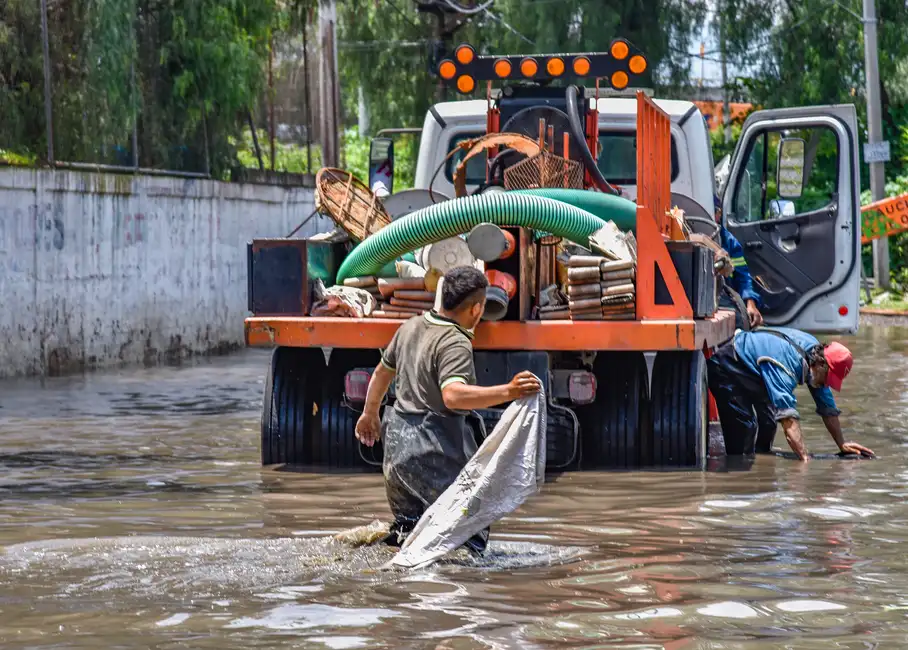
Water removal in Alabama costs $1,200 to $6,500 for most residential jobs in 2026, with the average single-room extraction and drying landing around $2,400. A small toilet overflow that stays contained might run $450 to $900, while a flooded crawl space or finished basement with category 3 sewage water can push past $10,000 once contaminated materials are hauled out and the space is sanitized.
Those numbers move fast depending on where the water came from, how long it sat, and what's underneath it. Below we break down real 2026 pricing by job type across central Alabama, explain what your homeowners policy will and won't pay for, and show you how to spot an estimate that's going to balloon on you.
How much does water removal cost in Alabama in 2026?
How much does water removal cost in Alabama in 2026? For a typical 1,500 to 2,500 square foot home, expect to pay $1,800 to $4,200 for extraction, industrial drying, and basic cleanup after a clean-water event like a burst supply line or a failed water heater. That range covers equipment, labor, moisture mapping, and the daily monitoring visits most jobs need over three to five days.
Water removal is the process of extracting standing water, drying structural materials, and restoring safe moisture levels so a home doesn't rot or grow mold. It's needed any time water enters a space it wasn't designed to be in - and in Alabama, that happens more than most homeowners expect.
Here's what the same job looks like at different sizes:
- Single room, clean water, under 24 hours: $450-$1,200
- Two to three rooms or a small basement: $1,500-$3,500
- Whole first floor or finished basement: $4,000-$8,500
- Crawl space with standing water and vapor barrier damage: $2,200-$6,000
- Sewage backup or storm flooding with contamination: $5,500-$15,000+
We give every homeowner a written scope and an upfront price before we pull a single hose off the truck. No surprise line items at the end.
What affects the cost of water removal in Alabama
What affects the cost of water removal in Alabama comes down to five things: water category, how long it sat, square footage affected, what materials got wet, and how accessible the space is. Two houses on the same street can get quotes $3,000 apart because of these variables alone.
Water category
Clean water from a supply line is the cheapest to handle. Gray water from a washing machine or dishwasher sits in the middle. Black water - sewage, storm flooding, or anything that's been standing more than 48 hours - is the most expensive because everything it touches has to be treated as contaminated and often removed.
How long the water sat
Mold can start colonizing wet drywall in 24 to 48 hours. Every day past that adds labor, antimicrobial treatment, and sometimes demolition. A burst pipe you catch in an hour is a completely different invoice than one you find after a weekend away.
Square footage and materials
Extraction is priced by area, but drying is priced by what's wet. Carpet and pad usually get pulled and tossed. Hardwood floors can sometimes be saved with mat drying systems - that's a specialty job, and we handle it under Hardwood Floor Water Removal in Alabama when the boards haven't cupped yet. Tile and concrete dry faster and cost less.
Access and equipment
A finished basement with a walkout door is easy. A crawl space with an 18-inch access hatch in 95-degree July heat is not. Tight spaces mean smaller equipment, more trips, and more hours.
Time of year
Alabama's storm season runs roughly March through May, with hurricane remnants pushing through in late summer and fall. Emergency calls during those windows carry a premium because every crew in the region is booked. Winter burst-pipe calls spike after the first hard freeze, usually in January.
Water removal prices by job type
Water removal prices by job type vary widely because the source of the water drives the entire scope. Here's what we see most often in central Alabama.
Burst pipe and supply line failures
A burst pipe behind a wall or under a slab typically runs $1,400 to $4,800 for extraction, drying, and drywall repair. Slab leaks are the expensive version because locating and accessing the pipe adds cost before water removal even starts. We cover the full scope under Burst Pipe Water Removal in Alabama.
Basement and crawl space flooding
Basements in older Birmingham-area homes flood for predictable reasons: clay soil that won't drain, aging French drains, and sump pumps that quit during a storm. Basement jobs run $2,000 to $6,500. Crawl spaces run $2,200 to $6,000 because the vapor barrier usually has to be replaced. Both are common calls for us in Water Removal in Birmingham, where the 1950s housing stock still has original drainage.
Sewage backups and toilet overflows
Sewage water is category 3 and priced accordingly: $3,500 to $12,000 depending on how far it spread. Toilet overflows that stay in the bathroom are much cheaper, usually $500 to $1,800. See our full breakdown under Toilet Overflow Water Removal in Alabama.
Storm and flood water
Storm water is almost always contaminated, and it usually hits more than one room. Expect $4,000 to $15,000 for a serious event. We handle these under Storm Water Removal in Alabama and Flood Water Removal in Alabama.
Sump pump failures
A dead sump pump during a heavy rain is one of the fastest ways to end up with a foot of water in a finished basement. Typical cost: $2,500 to $7,000 once you include the pump replacement.
Does Alabama homeowners insurance cover water removal?
Yes - most Alabama homeowners policies cover water removal when the water came from a sudden, accidental event like a burst pipe, a failed water heater, or an appliance supply line. The average HO-3 policy in Alabama covers the extraction, drying, and repair up to your dwelling coverage limit, minus your deductible.
What's usually not covered:
- Flood damage from rising water (requires a separate NFIP or private flood policy)
- Gradual leaks you should have noticed - slow drips under a sink, a stain that's been growing for months
- Mold that resulted from long-term neglect rather than a covered event
- Sump pump failure, unless you added the endorsement
Alabama deductibles for water damage claims typically run $1,000 to $2,500, though some policies use a percentage deductible for hurricane or named-storm damage - often 1% to 2% of the dwelling value. On a $350,000 home, that's $3,500 to $7,000 out of pocket before insurance kicks in.
Our advice: call your adjuster the same day you call us. We document everything - moisture readings, photos, affected square footage - so your claim moves fast and you don't get shorted on the scope.
Water removal vs mold remediation cost in Alabama
Water removal vs mold remediation cost in Alabama is a big gap: water removal runs $1,200 to $6,500 for most homes, while mold remediation runs $2,000 to $9,000 for the same footprint. The difference is that mold work requires containment barriers, negative air machines, HEPA filtration, and physical removal of contaminated materials.
Here's the part that matters: if you dry the structure properly within 48 hours, you usually avoid the mold bill entirely. That's why we push hard on same-day response. A $2,400 drying job beats a $7,000 remediation job every time.
If mold is already visible - black speckling on baseboards, a musty smell that won't quit - get it tested before you assume it's just surface mildew. We can tell you during the initial walkthrough whether you're looking at a water removal job or a remediation job.
What to watch out for when hiring a water removal company
The water damage industry has a few well-known traps. Here's what to watch for before you sign anything.
- Quotes given over the phone without a walkthrough. Nobody can price a water job without seeing it. If a company throws out a number before they've put a moisture meter on your drywall, that number is fiction.
- Pressure to sign a work authorization on the spot. You should have time to read it and call your insurance company. Any legitimate crew will let you do that.
- No moisture readings documented. Ask to see the daily readings. If they can't show you the numbers going down, they're not drying - they're just running fans.
- Equipment pulled too early. Drying takes three to five days in Alabama humidity. A crew that packs up after 36 hours is setting you up for mold.
- Storm chasers after a big event. Out-of-state trucks show up after every major storm. They take the check and leave. Hire a local company you can call back in six months if something's wrong.
One more: get the estimate in plain language. You should be able to read the scope and understand exactly what's being torn out, what's being dried, and what's being replaced.
When to call a professional
Call a professional the moment water touches anything beyond a bath mat. If you can soak it up with two towels, you're fine. If it's under the baseboards, inside a wall cavity, or standing anywhere for more than an hour, you need extraction equipment and commercial drying - a shop vac and a box fan won't cut it.
Specific situations that always warrant a call:
- Water has reached carpet, pad, or drywall
- You smell sewage or see discolored water
- The water has been sitting more than 12 hours
- Your crawl space or basement has standing water
- You see any sign of mold
AL Water Remover Pros handles water removal across central Alabama, from emergency extraction to full structural drying and documentation for your insurance claim. We answer the phone, we show up, and we tell you what it's going to cost before we start.
Frequently Asked Questions
How much does water removal cost in Alabama?
Most Alabama homeowners pay $1,200 to $6,500 in 2026, with an average around $2,400 for a single-room extraction and dry-out. Sewage backups, storm flooding, and finished basements push higher - often $8,000 to $15,000. Small contained overflows can run as little as $450.
How much does water extraction cost near me in Alabama?
Water extraction alone - just pulling the standing water out - typically runs $500 to $2,500 depending on volume and access. Drying and monitoring are separate line items and usually add $800 to $2,000 over three to five days. The full job is what most people mean by water removal cost.
Does Alabama homeowners insurance cover water removal?
Yes, for sudden accidental events like burst pipes, failed water heaters, and appliance line failures. Flood water from rising ground requires a separate flood policy. Gradual leaks and long-term neglect are typically excluded. Deductibles usually run $1,000 to $2,500.
What affects the cost of water removal in Alabama?
Five main factors: water category (clean vs. sewage), how long it sat, square footage affected, what materials got wet, and how accessible the space is. Alabama's humidity also extends drying times, which adds to the total. A crawl space job costs more than a slab-on-grade job.
How long does water removal take?
Extraction takes two to six hours for most homes. Drying takes three to five days, sometimes longer in Alabama's summer humidity. We monitor moisture daily and don't pull equipment until readings hit dry standard - usually below 16% moisture content in wood framing.
Get help with Water Removal in Alabama
If you've got water where it shouldn't be, call us now. We'll walk you through what it's going to take and what it's going to cost before we start.
Call AL Water Remover Pros at (833) 640-1438. We serve homeowners across central Alabama, and we answer the phone 24/7.