Water removal vs mold remediation: what do you need
Water removal extracts standing water fast; mold remediation kills and removes mold growth. Here's how to know which one your Alabama home needs right now.
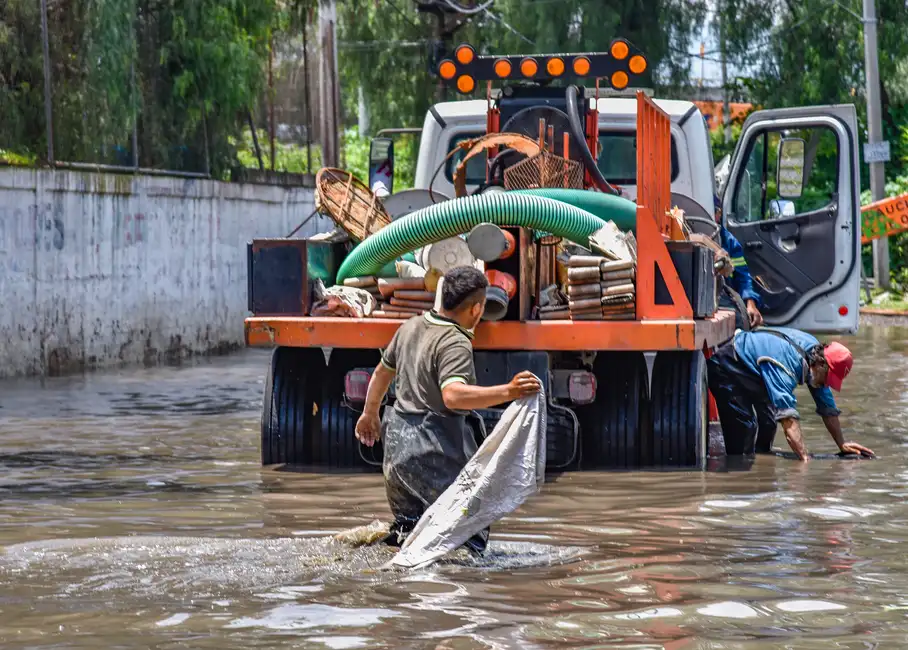
Water removal is the process of extracting standing water and drying the structure; mold remediation is the process of killing and removing mold growth that has already taken hold. If your floor is wet right now, you need water removal first - mold remediation only becomes the priority once mold is visible or the space has stayed damp for more than 24 to 48 hours. This guide breaks down what each service does, what they cost in Alabama in 2026, and how to tell which one your home actually needs.
We run water removal calls across Jefferson and Shelby counties every week, and the honest answer is that most jobs start as water removal and only some turn into mold work. Knowing the difference saves you money and, more importantly, saves your floors and framing.
The short answer: water removal vs mold remediation
Water removal vs mold remediation in Alabama comes down to timing and what is growing in the space. Water removal is a drying and extraction job. Mold remediation is a containment and removal job. They use different equipment, different protective gear, and different disposal rules.
Water removal is a restoration service that extracts standing water, pulls moisture out of building materials, and returns the structure to a dry, stable condition. It is what you call the same day a pipe bursts, a toilet overflows, or a storm pushes water under a door.
Mold remediation is a separate service that begins when mold spores have already colonized a surface. It involves negative air pressure, HEPA filtration, antimicrobial treatment, and removal of porous materials that cannot be saved. In Alabama's humidity, mold can start colonizing a wet wall cavity in as little as 24 to 48 hours, which is why the first service almost always determines whether you need the second.
What water removal actually does
Water removal in Alabama is a multi-step process, and skipping steps is how a small leak becomes a $12,000 rebuild. Here is what a proper job looks like:
- Water extraction. Truck-mounted or portable extractors pull standing water out of carpet, hardwood, and subfloor. A typical residential extraction removes 50 to 100 gallons in the first hour.
- Moisture mapping. We use thermal imaging and pin-type meters to find water that has migrated into wall cavities, baseboards, and ceiling joists - water you cannot see.
- Drying. Industrial air movers and dehumidifiers run for 3 to 5 days. We target 12 to 16 percent moisture content in wood framing before we pull equipment.
- Antimicrobial application. We treat affected surfaces to slow microbial growth while the space dries.
- Final verification. Moisture readings are logged daily. We do not call a job done until the numbers match a dry standard for your area.
If you are dealing with a flooded basement after a heavy November rain, that is a different scope than a slow supply-line leak. Our team handles Basement Water Removal in Alabama with the same extraction-and-dry sequence, just with more pumping capacity and a sump check at the end.
What mold remediation actually does
Mold remediation in Alabama is not just spraying bleach on a wall. It is a controlled removal process that protects the rest of the house while contaminated material comes out.
A remediation job typically includes:
- Building a containment barrier with 6-mil poly and negative air machines running HEPA filters
- Removing porous materials - drywall, insulation, carpet pad - that mold has penetrated
- HEPA-vacuuming and antimicrobial-treating the remaining framing and sheathing
- Disposing of contaminated debris per Alabama Department of Environmental Management guidelines
- Post-remediation verification, usually a third-party clearance test
Most residential mold jobs we see in the Birmingham metro area run between 10 and 100 square feet of affected surface. Above 100 square feet, containment and disposal requirements get stricter, and the price climbs accordingly.
Do I need water removal or mold remediation in Alabama?
Do I need water removal or mold remediation in Alabama? If the water is still there or the space has been wet less than 48 hours, you need water removal. If the space has been wet longer than 48 hours or you can see or smell mold, you need remediation - and usually water removal too, because the source has to be dried before remediation can hold.
Here is the decision tree we use on the phone:
- Water is visible and the area is still wet: water removal. Call now.
- Water is gone but the drywall feels soft or the baseboards are swelling: water removal with moisture mapping - there is trapped water.
- You smell that musty, earthy odor and see dark speckling on drywall or trim: mold remediation, likely combined with drying.
- You had a leak three weeks ago and never dried it properly: assume mold. Get an inspection before you paint or patch.
One thing we tell every homeowner: do not run a box fan and call it done. A box fan moves air but does not remove moisture. Without a dehumidifier pulling 30 to 50 pints per day out of the air, you are just circulating damp air through the house.
How much does water removal and mold remediation cost in Alabama?
How much does water removal and mold remediation cost in Alabama? Typical 2026 pricing for water removal in the Birmingham area runs $1,200 to $3,500 for a single-room extraction and dry-out, while mold remediation runs $1,500 to $6,000 for 10 to 100 square feet of affected surface. Whole-house or crawl space jobs can exceed those ranges.
What drives the number:
- Water category. Clean supply-line water is cheapest. Category 3 water - sewage backups, storm surge, toilet overflow with waste - requires disposal and disinfection that can double the labor.
- Square footage. A 200-square-foot bedroom is a half-day job. A finished 1,200-square-foot basement is three to five days of drying plus rebuild.
- Material type. Carpet and pad come out. Hardwood can sometimes be saved with mat drying, but it takes longer. If you are weighing that call, our Hardwood Floor Water Removal in Alabama page walks through when boards can be saved and when they cannot.
- Mold square footage. Remediation pricing is usually quoted per square foot of affected area, with a minimum job charge.
We quote the full scope before we start. No surprise line items after the equipment is on the truck.
Does Alabama homeowners insurance cover water removal and mold remediation?
Does Alabama homeowners insurance cover water removal and mold remediation? Most Alabama policies cover water removal when the damage is sudden and accidental - a burst pipe, a failed water heater, a storm-driven leak. Mold remediation is usually covered only up to a sublimit, often $10,000, and only when it resulted from a covered water event.
What is almost never covered: long-term seepage, neglected maintenance, and flooding from outside the home. Flood damage requires a separate NFIP or private flood policy. If you are in a low-lying part of Jefferson or Shelby County, that distinction matters - we see a lot of homeowners learn it the hard way after a spring storm.
Document everything before you throw anything away. Photograph the water line on the drywall, the wet carpet, the failed supply line. Your adjuster will ask for it, and so will we when we write the scope.
Common mistakes we see on Alabama water damage calls
Water damage cleanup in Alabama goes wrong in predictable ways. Here are the ones that cost homeowners the most:
- Waiting until morning. Every hour the water sits, it wicks higher into drywall and further under baseboards. A 10 p.m. call is cheaper than a 10 a.m. call.
- Using a shop vac and calling it done. A shop vac gets surface water. It does not get the water inside the wall cavity or under the subfloor.
- Running the HVAC to "dry things out." That pulls moist air through the whole house and can seed mold in rooms that were never wet.
- Painting over stained drywall. If the drywall was wet, the mold is behind the paint. It will come back through within a month.
- Assuming the smell will fade. That musty odor is microbial volatile compounds. It means mold is actively growing somewhere you cannot see.
If you are in one of the older mill towns north of Birmingham - we do a lot of work in Water Removal in Graysville - the housing stock is 60 to 90 years old, and galvanized supply lines and clay drain tiles fail in ways newer homes do not. That changes the scope. More hidden leaks, more crawl space moisture, more mold risk.
When to call a professional
Call a professional the moment water touches anything other than a sealed, non-porous floor - and call immediately if the water is black, smells like sewage, or came from outside the house. Those are Category 2 or Category 3 events, and they carry health risks that a wet-vac and a fan cannot address.
Call us if any of these are true:
- Standing water is deeper than a quarter inch across more than a few square feet
- The water came from a toilet, washing machine drain, or sewage line
- The wet area has been wet for more than 24 hours
- You can see or smell mold
- The water reached drywall, insulation, or a crawl space
- Your sump pump failed during a storm
AL Water Remover Pros handles both sides of the job - extraction, drying, and mold remediation - so you are not coordinating two companies and hoping they talk to each other. We serve homeowners across the greater Birmingham area, from Water Removal in Birmingham to the smaller communities along the 280 and I-20 corridors. One call, one scope, one crew.
Frequently Asked Questions
What is the difference between water removal and mold remediation in Alabama?
Water removal extracts standing water and dries the structure, usually within 3 to 5 days. Mold remediation kills and removes mold growth that has already colonized surfaces, typically over 1 to 3 days with containment. Water removal comes first; remediation only happens if mold has taken hold.
Do I need water removal or mold remediation in Alabama?
If water is still present or the space has been wet under 48 hours, you need water removal. If the space has been wet longer than 48 hours, or you can see or smell mold, you need mold remediation - and usually drying too. When in doubt, get an inspection.
Who does water removal and mold remediation in Alabama?
AL Water Remover Pros handles both water extraction and mold remediation across Jefferson and Shelby counties. We extract, dry, treat, and verify - one crew, one scope. Call (833) 640-1438 for same-day service.
Does Alabama homeowners insurance cover water removal and mold remediation?
Sudden, accidental water damage is usually covered. Mold remediation is typically capped at a sublimit around $10,000 and only when it stems from a covered event. Flood water requires a separate policy. Document everything before disposal.
How long does water removal take?
Extraction takes 2 to 6 hours depending on volume. Drying runs 3 to 5 days with equipment on site. We check moisture readings daily and do not pull equipment until wood framing hits 12 to 16 percent moisture content.
Get help with Water Removal in Alabama
Whether you need water extraction today or you are trying to figure out if that musty smell is mold, we can tell you in one visit. We serve Birmingham, Graysville, and the surrounding communities with same-day water removal and full mold remediation.
Call AL Water Remover Pros at (833) 640-1438 - we answer the phone, we quote the full scope upfront, and we do not leave until the moisture readings say the job is done.